Florida’s Gopher Tortoise Is Now Critically Endangered, and This One Made It Personal
If you know me, you already know how much I love turtles and tortoises. Our little place in Melbourne is even affectionately known as the Pink Turtle.
Earlier this year, Michael and I visited the Environmental Learning Center on Wabasso Island near Vero Beach. As we were leaving and heading back toward the Wabasso Bridge, I spotted a gopher tortoise making its way across the road.
We stopped and watched from a safe distance until it reached the grass. At the time, it felt like one of those special little Florida moments that stays with you. Now, after learning that the gopher tortoise has been classified as Critically Endangered on the IUCN Red List, these photographs mean even more to me.
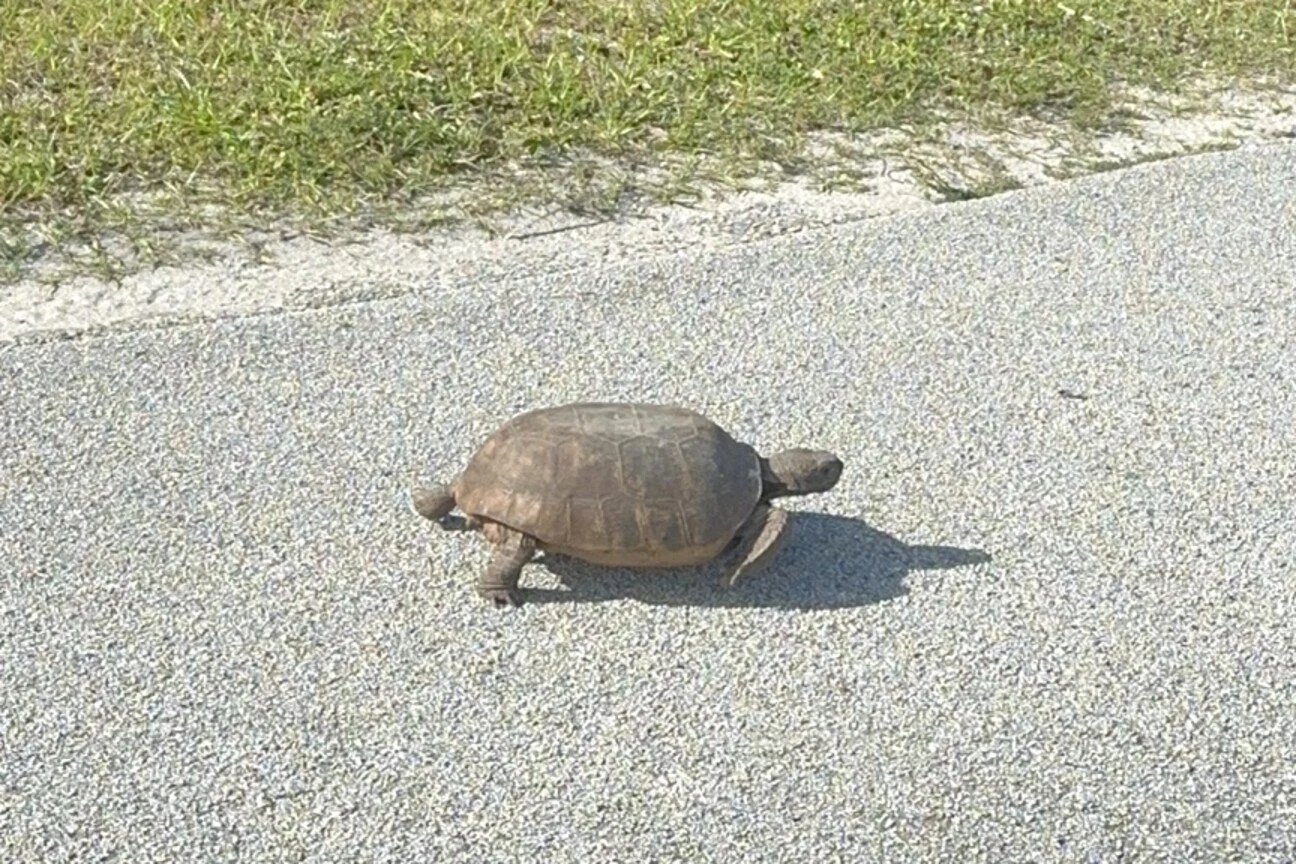
A gopher tortoise crossing the road near the Environmental Learning Center on Wabasso Island.
What Does the New Classification Mean?
The International Union for Conservation of Nature now classifies the gopher tortoise, Gopherus polyphemus, as Critically Endangered across its range.
That global assessment does not automatically change the tortoise’s legal status in Florida. The Florida Fish and Wildlife Conservation Commission still classifies the gopher tortoise as State-designated Threatened. Both the tortoise and its burrow are protected under Florida law.
The two classifications serve different purposes. The IUCN Red List evaluates the species’ risk of extinction across its entire range. Florida’s designation establishes its legal protections within the state.
Either way, the message is clear. Gopher tortoise populations and the habitat they need are under serious pressure.
One Tortoise Supports an Entire Wildlife Community
Gopher tortoises are considered a keystone species because the burrows they dig provide shelter for more than 350 other species.
Their burrows offer protection from heat, cold, severe weather and fire. Frogs, snakes, insects, small mammals and many other animals may use these underground shelters.
When gopher tortoise habitat disappears, the damage reaches far beyond one animal. An entire network of Florida wildlife can be affected.
Habitat Loss Is at the Center of the Problem
Gopher tortoises need dry, sandy uplands with sunlight and low-growing vegetation for food. Unfortunately, those are also the kinds of places frequently cleared for roads, homes and commercial development.
Florida continues to grow, and people need places to live. That growth must include responsible planning, required wildlife surveys, protected habitat and properly permitted relocation when it is necessary.
Relocation may save a tortoise from immediate danger, but it does not replace the need for permanent, well-managed habitat.
As a real estate broker, I believe development and conservation have to be considered together. Protecting wildlife should begin during the planning process, before clearing or construction starts.
The Environmental Learning Center on Wabasso Island
After looking through my photographs and retracing our visit, I was finally able to confirm where we were that day.
The Environmental Learning Center is located on a 64-acre island campus in the Indian River Lagoon near the Wabasso Bridge. It offers nature trails, boardwalks, aquariums, educational programs and opportunities to experience native Florida wildlife.
The beautiful sea turtle sculpture I photographed there is named Ethel. Finding Ethel’s location helped me identify the exact place where I had seen the gopher tortoise.
The Environmental Learning Center is also home to more than 60 gopher tortoises. Visitors have a good chance of seeing one while exploring the campus, especially when the tortoises are active and searching for food.
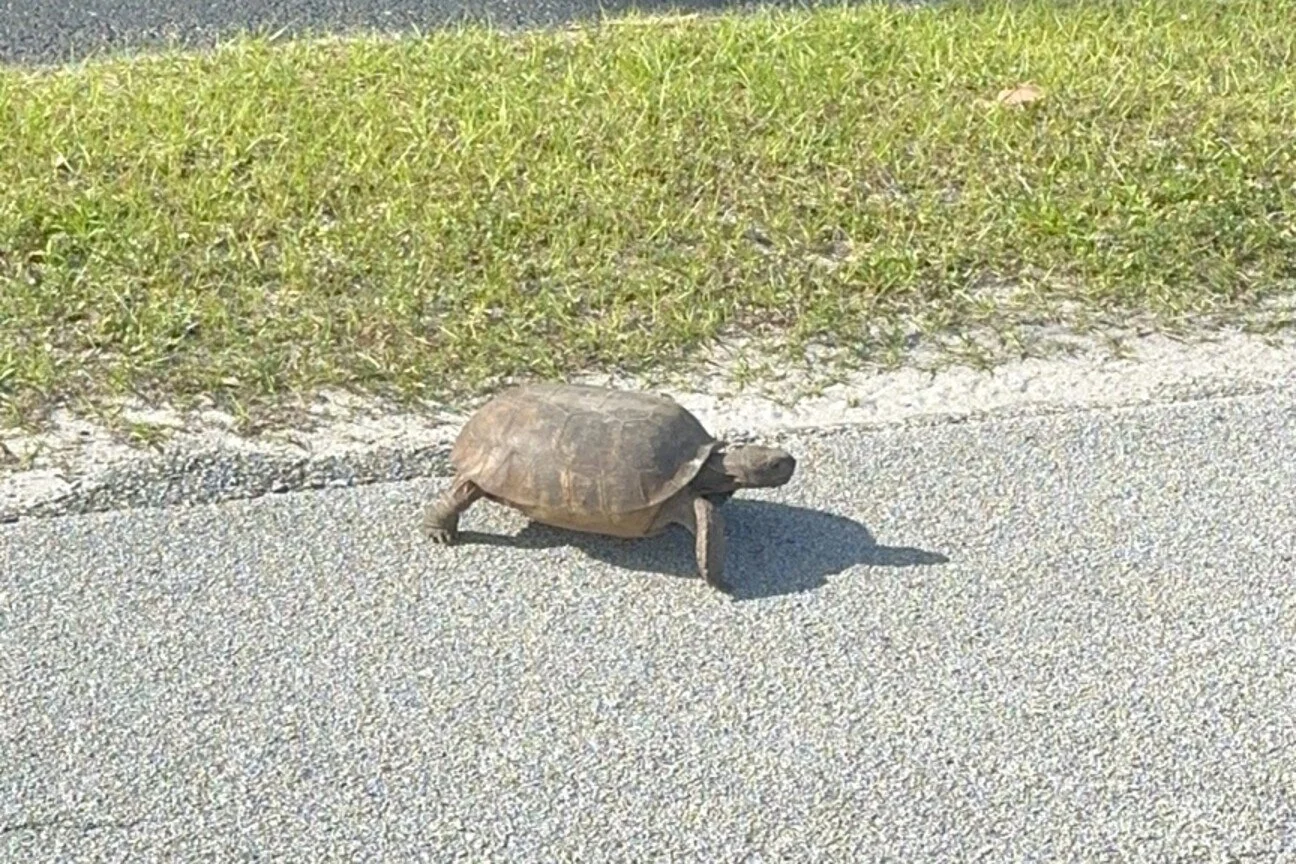
Gopher tortoises sometimes cross roads while searching for food, habitat or a mate.
What Should You Do If You See a Gopher Tortoise?
If a healthy gopher tortoise is not in immediate danger, the best choice is usually to give it space and leave it alone.
If an uninjured tortoise is in a road and you can help without putting yourself or anyone else in danger, Florida FWC says you may carefully place it out of harm’s way on the side of the road in the same direction it was already traveling.
Do not take the tortoise home, place it in your vehicle or move it to another area. Never put a gopher tortoise in water. It is a land animal and cannot swim like an aquatic turtle.
If you find a sick or injured tortoise, take a photograph if possible, record the location and contact a licensed wildlife rehabilitator or the Florida Fish and Wildlife Conservation Commission for guidance.
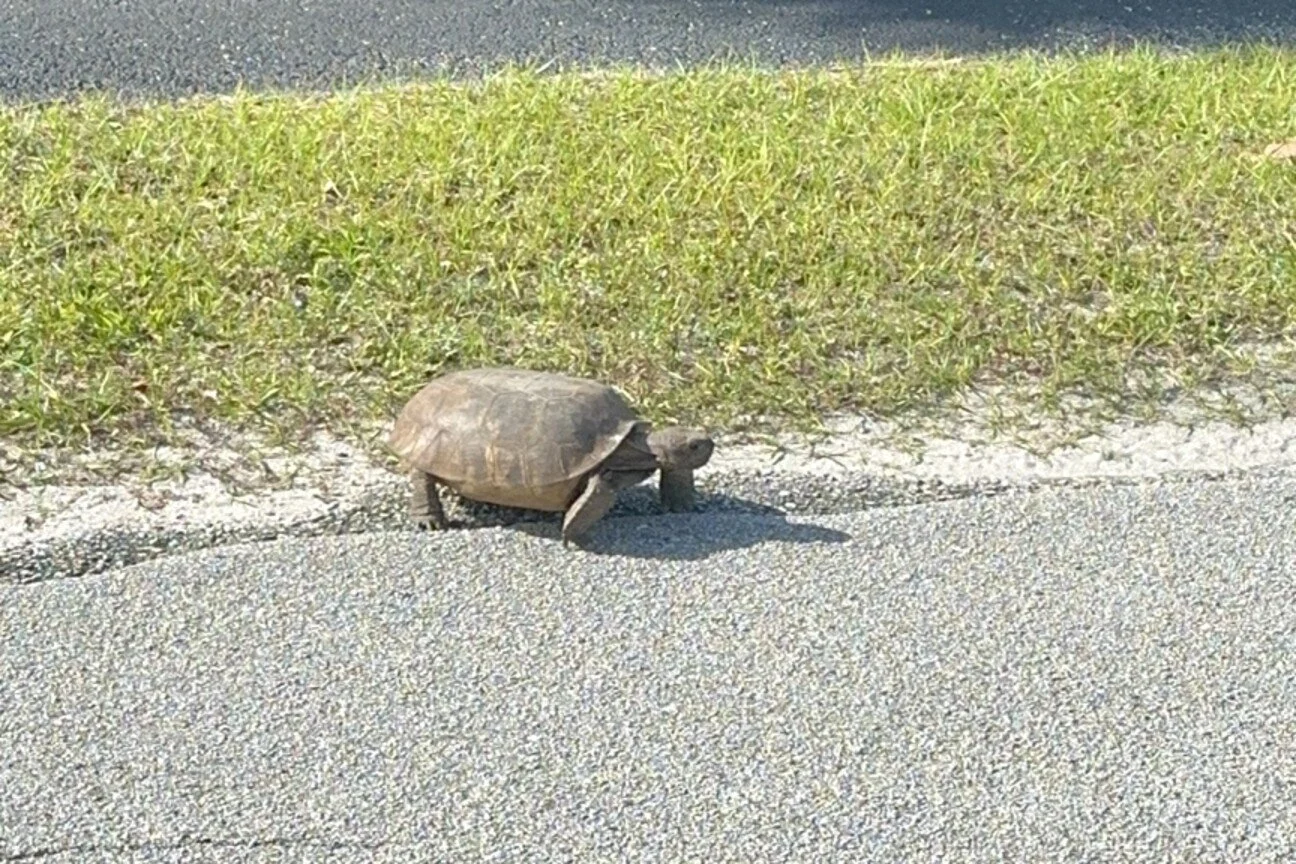
Safely reaching the roadside near the Environmental Learning Center.
Give Them Room to Roam
The Environmental Learning Center offers a $500 symbolic gopher tortoise adoption. The contribution supports animal care, habitat maintenance and environmental education.
I am reaching out to the ELC about creating a community fundraiser called Give Them Room to Roam, with an initial goal of raising $500 for the symbolic adoption.
I want every donation to go directly to the Environmental Learning Center. Once the fundraiser is approved and the correct donation link is established, I will share the details.
This will not solve the larger problem of habitat loss, but it gives us a practical way to support an organization caring for gopher tortoises while teaching residents and visitors why these animals matter.
A Small Florida Moment With a Larger Meaning
That little tortoise near the Wabasso Bridge was simply trying to cross the road and continue through the only home it knows.
I am grateful we saw it. I am grateful it crossed safely. I am also more determined to pay attention to the wildlife living alongside us and to support the people working to protect it.
We can help by slowing down, watching the roads, respecting burrows, following Florida’s wildlife laws and supporting responsible conservation work.
They need habitat, protection and room to roam. 🐢
Learn More
Visit the Environmental Learning Center
Support the Environmental Learning Center
Learn about the ELC’s symbolic gopher tortoise adoption